The expedition behind the atlas
⚑
How Jester's Atlas began
In 2021, four friends from the Gold Coast came back from a camping trip with sunburn, a broken tent pole, and a shared observation: the little joker-themed puzzle games we had played around the campfire had given us more honest joy than most big releases that year. Nobody was writing about them seriously. So we decided to — but in the only voice that felt right, the voice of the travel journals we all grew up reading.
Since then we have treated every game as a destination. We do not “complete content”; we visit places, meet their locals, take notes on the weather, and report back. Some destinations earn a return ticket. Some are lovely for a weekend. A few we quietly advise you to skip, the way a good guidebook warns you about a tourist trap.
We remain fully independent. Every game on our routes is purchased with crew money. We accept no sponsorships from studios, no early-access favours in exchange for kind words, and no advertising that resembles a review.
The crew manifest
The expedition charter
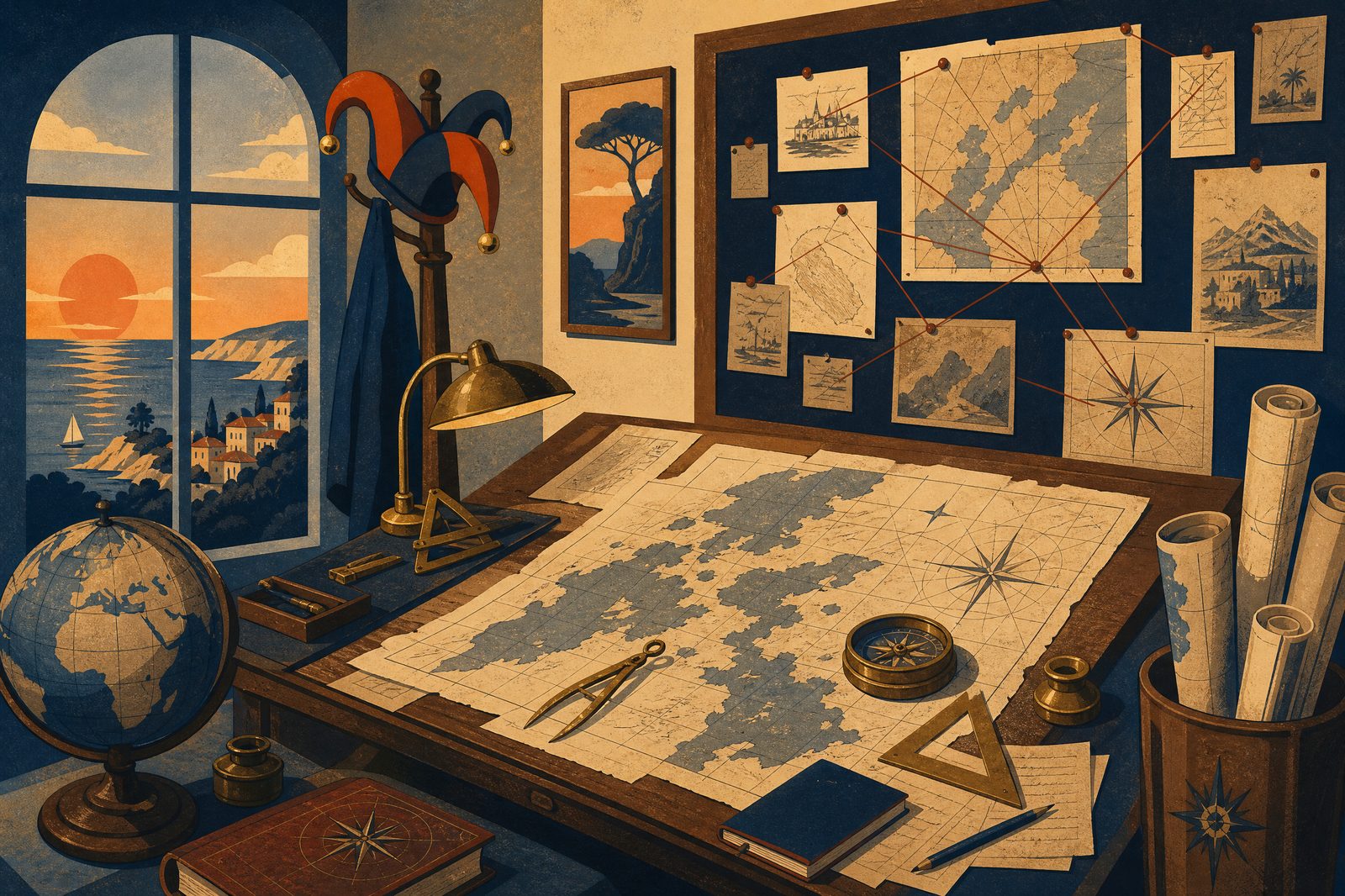
Six rules, pinned above the cartography desk, that every report must obey:
- Finish the journey. No report is filed until the credits roll or forty hours pass, whichever comes first.
- Two travellers minimum. Every game is played by at least two crew members before a bearing is set.
- Bearings, not scores. We rate in degrees out of 360. A full circle means we would start again the moment we finished.
- Note the weather. Bugs, rough patches and accessibility gaps are recorded honestly, including those fixed by later patches.
- Own money only. Review copies are declined. The atlas stays independent because the crew pays its own fare.
- Kindness in criticism. Small studios make most of these games. We critique the work, never the workers.